

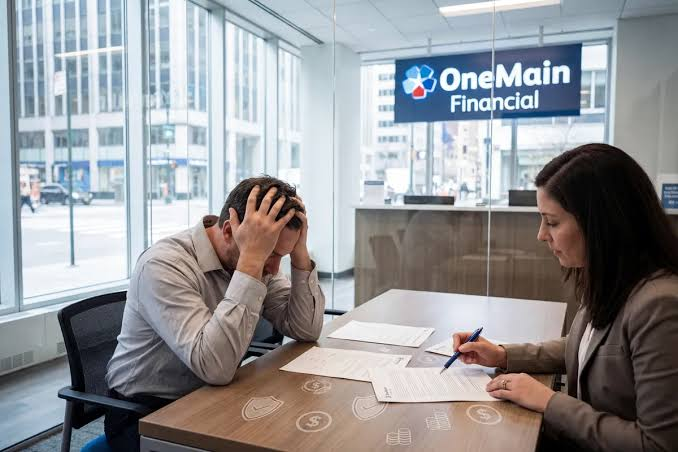
If you’ve ever borrowed from OneMain Financial, go check your mailbox. On September 25, 2026, the lender told the Texas Attorney General that hackers had taken customer names, addresses and Social Security numbers, and notice letters started going out around September 28. The OneMain Financial data breach itself happened back in May. Customers are only hearing about it now, and the lawyers showed up almost as fast as the letters did.
Four Months Is a Long Time to Wait
OneMain says it noticed suspicious activity on its network in May, shut it down, and hired an outside forensic firm. The investigation concluded that personal data was accessed or acquired on May 5, 2026.
The public record doesn’t agree with itself on dates, which is worth knowing. California’s registry lists May 5 and May 8. Oregon’s filing gives a window of May 5 to May 12, and it also carries an August 18 date that may simply mark when OneMain finished working out who was affected. Whichever you pick, the distance between the break-in and the notification is around four months.
And there’s plenty OneMain hasn’t said. It hasn’t named the attacker or described how they got in. It hasn’t explained the delay either. If someone online tells you this was ransomware or points at a specific gang, they’re guessing.
Counting the Victims of the OneMain Financial Data Breach
OneMain runs more than 1,400 branches across 44 states, yet the numbers that have surfaced come from only a handful of regulators. Texas reports 15,472 residents. South Carolina reports 1,516. Oregon lists 960. Together that’s at least 17,900 people, though I’d treat it as the minimum. California and Massachusetts also received filings, and neither has produced a national total that I could find.
OneMain’s customers are mostly people with personal loans and auto loans, so the data that leaked sits very close to what a fraudster would want.

Why This Particular Combination Hurts
Passwords can be reset in half a minute. Social Security numbers can’t. Pair one with your full name and home address and a thief has most of what’s needed to apply for credit as you, file a fake tax return, or take out a loan you’ll hear about only when a collector calls.
The lawsuits go further than OneMain’s own statements. They claim the stolen files were unencrypted and that the data later turned up on the dark web. Those are allegations from plaintiffs. OneMain hasn’t confirmed either point, and no court has ruled on them. Even so, anyone who got a letter about the OneMain Financial data breach should plan as if the information is already out there, because records tied to SSNs get traded and reused for years.
The Lawsuits Arrived Fast
Two proposed class actions, brought by plaintiffs named Harris and Fedorchak, were filed within roughly a week of the notices. Both seek to represent everyone affected by the OneMain Financial data breach across the United States. They accuse OneMain of negligence, breach of implied contract and unjust enrichment, and they argue that proper network monitoring would have caught the intrusion much earlier. One plaintiff says she’s already burned several hours checking bank accounts, pulling credit reports and changing passwords.
They’re asking for damages, restitution, court-ordered security upgrades with regular audits, and lifetime credit monitoring plus identity theft insurance. More law firms have announced investigations, so expect additional filings.
Here’s the part people tend to miss. Nothing has been certified and no settlement exists. Nobody has a claim to submit today. The monitoring in your letter is OneMain’s own offer and has nothing to do with the lawsuits.
The Free Monitoring Offer and Its Deadline
Affected people are being offered 24 months of credit monitoring and identity restoration through TransUnion, administered by Cyberscout. Reports put the enrollment cutoff at December 31, 2026, though your own letter has the date that counts. There’s also a dedicated phone line, 1-833-516-9566.
Sign up. It won’t stop anyone from trying to use your SSN, but it can shorten the time between a thief’s first attempt and the day you find out. One caution: the plan watches a single bureau’s file, so it’s a smoke alarm and nothing more.
What to Do Before You Finish Your Coffee
After the OneMain Financial data breach, the strongest single step is a credit freeze. It’s free, it blocks most new-account applications until you lift it, and you have to place it separately with Equifax, Experian and TransUnion. If your letter pushes you toward the monitoring service, enroll first or be ready to lift the freeze briefly, since a freeze can get in the way of signing up.
Then pull your free credit reports and read them line by line for accounts you never opened. Glance through bank and card statements for tiny, strange charges, which thieves like to use as tests before going big. Be wary of every call, text or email that mentions OneMain, because scammers pounce on breach news within days. If you want to reach the company, use the number printed on your letter and nothing else. Hang on to the letter and its envelope too, in case a settlement notice asks for proof later.
This Isn’t the 2022 Breach
OneMain disclosed a different breach involving California customers connected to a 2022 incident. The 2026 OneMain Financial data breach is a new event, and no link between the two has been stated. If you got notices for both, keep both.
Questions People Keep Asking
What information was exposed in the OneMain Financial data breach?
The state filings list names, mailing addresses and Social Security numbers. The lawsuits allege some account-related details may have been involved as well, though OneMain’s notices as reported name only those three items. Your own letter spells out what applies to you.
I haven’t gotten a letter. Was my data taken?
Maybe not, but don’t assume you’re clear. Notices have been trickling out since late September and mail can be slow. Call the help line to ask, and consider freezing your credit regardless, since it costs nothing.
Can I join the class action over the OneMain Financial data breach?
There’s nothing to join yet. The cases are proposed, not certified, and no settlement has been announced. If one comes, affected people would normally receive a formal notice explaining how to claim benefits, which in other breaches have meant cash payments, credit monitoring, or both.
Will OneMain’s monitoring stop identity theft?
No. It tells you when your credit file changes and helps with recovery if something goes wrong. Combine it with a freeze and you’ve covered both warning and prevention.
The Takeaway
The OneMain Financial data breach is one more reminder that the company holding your data may sit on bad news for months. Nobody else is going to do the protecting in that gap. Freeze your credit, enroll in the TransUnion offer before December 31, and keep an eye on your accounts. The lawsuits will crawl along for a long time, and there’s no reason to wait for them.